Saturday, November 1, 2008
Fast forward to now
We are still trying to get Emma's blog caught up and include lots of info and pics from the benefit fair. But until then, we want to keep up with her current stuff.

Saturday, July 19, 2008
Benefit Fair
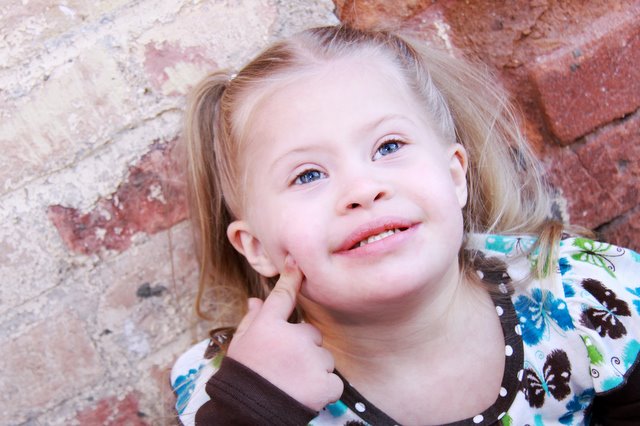
Emma was born with Down syndrome and within a year developed juvenile diabetes. Her days are filled with endless monitoring and continual struggles. On July 19th, 2008 from 10 a.m. to 4 p.m. we will be having a benefit fair at Wines Park (500 N. Center, Lehi) in behalf of Emma to help her family cope with the medical costs of major surgeries, medication, and doctor appointments that have buried the young family and will for years to come. A non-profit organization called Endless Hope Foundation has been started on behalf of Emma and donations are accepted at any Zions Bank. If you're interested in helping, please leave a comment with a way you can be reached. Thank you.
Thursday, July 3, 2008
Team Emma
Having a child with special needs means that you raise your baby with a whole group of people and specialists. It really stinks! We selfishly want her all to ourselves. Emma's first team members: Kids on the Move (early childhood intervention services). Therapists started coming to work with Emma at our house (during lock down) when she was 2 months old. Emma had to do physical therapy, occupational therapy, speech therapy, and classes at the KOTM center all to help her overcome her developmental delay. Kids on the Move has been awesome! Unfortunately, she was only able to stay there until she was 3 because the school district takes over at age 3.
Emma's second team members: Doctors, lots of them. Pediatrician, Pediatric Endocrynologist, Pediatric Opthamologist, Pediatric E.N.T., Pedicatric G.I., Pediatric Surgeon, etc. These are just the main ones that Emma sees on a regular basis.
Emma's third team members: Family. Everybody in the family just adores little Emma. The difficulty comes when Mom and Dad need to take a break and we can't just leave her with any babysitter. Fortunately, our family has been willing and made a lot of effort to learn her care so they can help out.
Emma's second team members: Doctors, lots of them. Pediatrician, Pediatric Endocrynologist, Pediatric Opthamologist, Pediatric E.N.T., Pedicatric G.I., Pediatric Surgeon, etc. These are just the main ones that Emma sees on a regular basis.
Emma's third team members: Family. Everybody in the family just adores little Emma. The difficulty comes when Mom and Dad need to take a break and we can't just leave her with any babysitter. Fortunately, our family has been willing and made a lot of effort to learn her care so they can help out.
Wednesday, February 1, 2006
A Big Day for Emma

Getting ready for surgery
Surgery preparation consists of fasting for several hours prior to anesthesia (everybody has to do this), but this was not an easy task for a baby with diabetes. It was quite a stressful night before the surgery trying to maintain stable blood sugar because they couldn't operate without that. Has anybody heard of stable blood sugar in an infant with diabetes? NO. And without food it is even more impossible. Anyway, we did our best, but failed as her blood sugar dropped in the pre-surgery waiting room. So, they had to hook her up to an IV bag with sugar in it to help stabilize her which made the wait even longer (with a baby that hadn't eaten in hours!).
Surgery went very smooth. Recovery, however, is another story. Typical Emma style, she kept us hopping post-surgery. She went straight to the Pediatric Intensive Care Unit (PICU) as a precaution because surgery is stressful on the body, and stress makes diabetes difficult to manage. So, off she went to the PICU to be taken care of and monitored. Her diabetes went into a sky high tailspin which made her really sick on top of being miserable from the surgery. Her blood sugar was so high, it wouldn't even register on the meter (glucometer). This meant she was at risk for developing DKA again. Fortunately, she only had to spend (a long) 24 hours in the PICU, after which she improved enough to be transferred to a regular recovery room. She spent about a week in the hospital all together, which wasn't too bad, but we were ready to be out of there by the time we left.

In the regular recovery room, such a tough baby

This is how she was a lot of the week
Her recovery was very difficult because she had both surgeries at the same time, not to mention she didn't want to eat (sensitive from the T&A) which made her diabetes a nightmare to control. Her food choices were limited because she couldn't go directly back to eating solid foods after a nissen, she had to start with liquids and gradually work into solids again. The worst part, though, was that she ended up getting a stomache bug that made her want to throw up. A lot of times we take Emma to the hospital for one thing, and come out with another..... Anyway, this was the worst thing that could have happened after a nissen surgery because she couldn't throw up, but her body wanted to. It was so sad to watch her struggle through that. Nissen surgeries don't last forever, either, and they had warned us of the possibility of the surgery being ruined from prolonged stress on the site from the body trying to throw up. Mom came home with it, too, so the first few days after coming home were truly a nightmare.

Closer to going home
A few weeks later, Emma bounced back to her normal self, again showing us how tough she really is. In spite of how awful the nissen makes "the throw ups" for Emma, it has been amazing at controlling and helping her reflux.
Sunday, January 1, 2006
A Niss-a-what?
At the same time as the sleep study, Emma's reflux problems kind of came to a head. It started when she was a baby, and they wanted to wait for six months to see if she would outgrow it. She didn't (surprise...), so the next step was medication, which she was on for a while. In spite of the medication, she was still having problems, so they did an upper GI test and a biopsy of her esophagus. These tests helped determine that she needed to have surgery to help reduce the acid, because the medication wasn't doing enough. This surgery is called a Nissen Fundoplication (a big fancy name that means surgery to stop reflux, it also means you can't throw up your cookies anymore).
Friday, December 23, 2005
Obstructive Sleep Apnea
Yep, she has it. Emma's first sleep study (polysomnography) was at the sleep clinic at PCMC on December 23, 2005. A sleep study is kind of like a slumber party at the hospital, minus the pillow fights and any hint of fun. She looked like an alien with all the wires they attached to her head and we were sure there wasn't anyway she was getting a wink of sleep looking like that. But, surprisingly, she slept and so did mom (a little), in spite of all the equipment, cables, cameras, etc. One of the things they monitor is sleep positioning. The next morning, the nurses were beside themselves because they hadn't seen anybody sleep in some of the positions she did and they didn't know how to even begin describing them. We found that quite amusing, yet knowing Emma, it wasn't surpirsing because she tends to get quite creative with her sleep positions. And, the result: Severe sleep apnea! She was already on oxygen at night when she slept, so the next step was surgery to remove her tonsils and adenoids (usually the main culprits in airway obstruction with kids).
Friday, November 18, 2005
A stomach bug ---- we mean diabetes
Friday, November 18, 2005. (about 2 weeks after her first birthday) Emma got really sick and started throwing up, and by the end of the day she was very miserable. We remember she was tossing and turning alot for hours on end. By the afternoon the next day, we decided to take her to the after hours clinic because she hadn't improved any and had developed raspy breathing. We thought maybe we were dealing with croup, too. The after hours doctor listened to her lungs and said it probably was croup based on what we told him. She also had really bad thrush, but we assumed it was from the strong antibiotic she had been on post pneumonia. The doctor sent us home with a prescription for oral steroids. Something in Lisa's gut didn't feel right about the steroids, and luckily we didn't give any to Emma (steroids raise blood sugars uncontrollably high and she was showing signs of acute diabetes melitis). By Sunday morning we started thinking the bug had passed through her because she had stopped throwing up and wasn't thrashing around anymore. And she was finally sleeping for the first time in 2 days, so we let her sleep. After about an hour, we checked on her and noticed that the thrush was excessively bad and it was everywhere. Lisa tried waking her up and as she got closer to her she thought she smelled apple juice ("weird" she thought). Emma would not wake up. Her eyes opened a little bit, just enough for us to see that they were rolled back in her head and she was not responsive at all. We knew this was something more serious and immediately headed for the emergency room. When we got there, triage (emergency room check-in) took one look at her and rushed us to the back. (Just a side note, any time medical staff seem rushed and they give you all their attention, that is usually not a good sign....) Doctors came in and ordered a bunch of tests and tried to start an IV. Emma's little body was so dehydrated, though, that her blood vessels had all but collapsed and were bone dry so they had a really hard time to get an IV line in. We started getting really upset at this point, because she seemed like she had plenty of wet diapers all weekend (we had been monitoring because of the vomiting), but now they were telling us that she was dehydrated. Lisa kept saying to them "none of this makes any sense!" By some miracle, a nurse that had come down from the pediatric floor (PEDS) was able to get an IV line started on Emma in her foot. Shortly after, the preliminary results from the blood tests came back and the doctor said she probably had diabetes. Everything started making more sense at that point after they explained diabetes a little bit, but Emma's condition was extremely critical. Her PH level was extremely off (very dangerous) and her BG (blood glucose or blood sugar) was so high they had to dilute it to run it through the machine again. Just a few minutes before they admitted her to the hospital, the doctor came in and said IT, "it's official, she's a diabetic." Her blood glucose came in at a whopping 1300, the average person is diagnosed with a blood glucose of 300-400. It was one of the highest they had ever seen at that hospital. Needless to say, she was very, very sick.
DKA
Emma was also diagnosed with diabetic ketoacidosis (a life-threatening complication in patients with untreated chronic high blood glucose). Basically, she was in a diabetic coma. She had high blood glucose, high levels of ketones, and acidosis (they said it was like she had acetone running through her veins, that explains the thrashing around....). The croupy breathing was explained to us as being Kussmaul breathing, a complication of severe acidosis. Emma was critical for several days before she started turning the corner. It was a huge miracle for us to watch her come back to life, AGAIN!!!
DKA
Emma was also diagnosed with diabetic ketoacidosis (a life-threatening complication in patients with untreated chronic high blood glucose). Basically, she was in a diabetic coma. She had high blood glucose, high levels of ketones, and acidosis (they said it was like she had acetone running through her veins, that explains the thrashing around....). The croupy breathing was explained to us as being Kussmaul breathing, a complication of severe acidosis. Emma was critical for several days before she started turning the corner. It was a huge miracle for us to watch her come back to life, AGAIN!!!
Tuesday, November 15, 2005
The missed signs
In hindsight, it's easy to see that all the main warning signs for type 1 diabetes were there, we simply didn't know them. It started with her leaking out of her diaper, we just thought she needed a bigger size. She ate A LOT. We thought we were really lucky to have such a good eater because a lot of children with Down syndrome have feeding issues due to sensory problems. We celebrated the fact that she ate so much. All of these started maybe a month before she was diagnosed, but after the pneumonia we probably noticed them the most but didn't think much of it. So, beware, it can set in really fast.
We try not to blame ourselves anymore, we're just now determined to tell people Emma's story in an effort to help even just 1 family or person not get to the point Emma did. Emma was not a likely candidate, she was barely 1 year old, and with all of our focus on Down syndrome and her other complications it's easy to see how we could miss it.
We try not to blame ourselves anymore, we're just now determined to tell people Emma's story in an effort to help even just 1 family or person not get to the point Emma did. Emma was not a likely candidate, she was barely 1 year old, and with all of our focus on Down syndrome and her other complications it's easy to see how we could miss it.
Friday, November 4, 2005
The 'P' word
Pneumonia, we're not at all fans if you were wondering. The morning after Emma's crappy first birthday, she woke up with a fever of 103. She was lethargic (limp and really weak). We called Primary Children's Medical Center (PCMC), following post-surgery instructions, and they wanted her to come back in immediately. After testing and x-rays, she was diagnosed with pneumonia, probably a complication from her surgery the previous day. She was really sick and had to stay in the hospital that night. During the night, the alarms on her oxygen monitors kept going off. The nurse thought it could be a sign of sleep apnea, because Emma's oxygen levels only dropped when she was asleep. We were able to go home the next day, but not without oxygen for when she sleeps and a heavy duty antibiotic (that gave her thrush).
Thursday, November 3, 2005
Happy Birthday! (I mean Crappy Birthday)
Due to scheduling difficulties at the hospital, Emma had ear tubes put in on her first birthday (we know, we didn't think she would care, but it was hard on us). It was supposed to be a quick, in-and-out process and we would be home in a couple hours to throw a birthday party still, no big deal. Wrong!!! We were reminded again that we should plan for the unexpected with Emma. She didn't come out of the anesthesia very well, so she was observed in recovery for a long time. So, we tried to have a party for her in the recovery room that afternoon.

 She still had fun....
 She loved her baby doll we gave her.
Soon after, Emma started running a fever, which meant we couldn't go home. Aaaarrrrggghhh!!! After a few more hours her fever subsided (thank you Motrin) and we were set free. Off to her party...
She still had fun....
Saturday, October 1, 2005
Can you hear me now?
One of the many complications associated with Down syndrome is hearing loss, both conductive and sensory. Fall 2005, we noticed Emma was showing signs of hearing problems. Testing proved that she had conductive hearing loss, which means she could hear, it was just blocked by crap in her ear. Tubes it is! Surgery #2....
Sunday, May 1, 2005
Heart surgery (sort of)
Emma's PDA, which normally closes after birth, never did. Therefore, in May of 2005 Emma had her first surgery to close it. They closed it with a surgical method called an intravascular coil. Basically, they enter through a vein and shoot this little coil into the heart and it ties up the hole. (now we just have to remember to tell x-ray technicians that "that metal thing in her heart" is supposed to be there...)

 She wasn't too excited pre-surgery. She must have remembered the hospital...
Saturday, April 30, 2005
Lock Down = Isolation
This has become our family ritual during the winter months of having to protect Emma by keeping her away from germs due to her extreme susceptibility to illness. We had to be especially careful the first winter after bringing her home from the hospital. It takes a long time for the body to fully recover from sepsis. We pretty much didn't leave the house from December to May. Jeff went to work and back, that's it.
Tuesday, March 1, 2005
Helmet Head (a new fashion accessory)

(Story in a nutshell) Emma developed torticollis which then lead to plagiocephaly and she had to have helmet therapy to help correct her "flat head." On a scale of 1-10, with 10 being the worst, Emma started at an 8 and the helmet corrected her to a 3. So, her head is still a little flat on one side (which is really only noticeable with pigtails), but we still love her. (of course!)
Wednesday, December 1, 2004
The first 28 days
Most parents prepare for the birth of their baby with the expectation that they will be bringing their healthy baby home from the hospital within a couple days. Emma has taught us, however, that we should always expect the unexpected. She came into this world in a whirlwind of sickness and complications. Within minutes, we knew of her initial diagnosis of Down syndrome, (a.k.a. Trisomy 21) which the doctor said would have to be confirmed still by a blood test. It was quite apparent, though, from her appearance that this diagnosis was true. She had several physical charecteristics of Down syndrome which the doctor explained to us: creases in the palm of the hands, low-set ears, slightly slanted eyes, and an unusually large gap on both feet between her large toe and the one next to it. Emma was struggling to breath from the beginning, and after working on her for a few minutes, the nurse allowed Lisa to hold Emma. It was a very brief moment, because Emma's breathing quickly got worse and became very labored. Little did Lisa know that she wouldn't get to hold Emma again for almost 2 weeks.
 Emma in the nursery
 She was taken to the nursery and assessed there by the doctor on call. Jeff went with her while Lisa was left all alone in an empty room wondering what was happening. Things happened very quickly that first hour as she went from being assessed in the nursery to being admitted into the NICU (neonatal intensive care unit). It was very difficult for us as parents to get thrust into a new world of medical terms and acronyms that we didn't understand and it all seemed so scary. A couple hours later, Jeff took Lisa via wheelchair up to the NICU to meet with the neonatologist. He discussed with us their intial assessment of Emma. She had an infection and was still struggling to breathe. He started discussing with us in more detail how many babies with Down syndrome are born with congenital heart defects, which in turn can cause pulmonary hypertension. They felt like this was the most likely cause of her breathing struggles. He went on to talk about the possibility of intubation if her breathing didn't improve. They also scheduled an echocardiogram for the next morning to look for heart defects, which meant a high probablity of open heart surgery... It was a rough night.... The next morning ("Black Thursday" as it became known) they had already intubated Emma during the night and the echocardiogram showed no defects (lucky girl!). The x-ray of her lungs, however was not so promising. She did, in fact, have pulmonary hypertension believed to be complicated by her abnormally shaped lungs. The doctor said her lungs looked like the Liberty Bell, which became her first nickname.

Thursday morning in the NICU
By Thursday afternoon, Emma's condition continued to decline. They explained that her infection had spread throughout her body by entering the bloodstream, also known as newborn sepsis. The regular ventilator wasn't enough to sustain her breathing, so they switched her to a high frequency oscillatory ventilator. Her blood pressure was dangerously low, admist other complications. This was the first time we were faced with the possiblility of losing our newborn baby. Nothing in the world can prepare you to face that reality...

 We looked like crap and felt like it, too. (the smiles were very forced...)
That night, Emma took another turn for the worse. She was "maxed out," as they called it, on life support. They were giving her the max doses of her life-sustaining medications and her only option was ECMO, a heart/lung support machine. Basically, her body was shutting down and we made the decision to move forward towards ECMO, which meant a transfer to another hospital. The closest hospital with this capability was Primary Children's Medical Center, where she was taken by LifeFlight around 5:00 a.m. Friday morning. Emma arrived at PCMC in critical, but stable, condition (a shock to all of us). A fighter was born in Emma for the first time, as her condition slowly started improving after arriving. She was still very, very sick, but ECMO was put on the back burner. PCMC became our new "home away from home." Over the next couple days, Emma swelled up like a balloon and gained 3 pounds because they were constantly giving her IV fluids to sustain a stable blood pressure.

 Her second nickname became "Sumo Baby," it was so sad!
The next 3 weeks consisted of ups, downs, and more ups and downs. It was a rollercoaster ride of strained emotions combined with gradual improvements in Emma's condition. We were dealt a crash course in NICU technology and terminology. We spent our first holiday in a hospital (Thanksgiving), and Lisa finally got to hold her baby (vent tubes and all) after 12 long days.
 Lisa was in heaven!
Emma continued to get better and we did eventually get to bring her home. As long as this post has been, it doesn't do this experience justice. It was a bitter-sweet experience through it all.
 Emma's coming home day. Notice the outfit barely fits that we had bought prior to her birth as a "coming home" outfit. This was about the only time she wore it...
Subscribe to:
Posts (Atom)


.JPG)
.JPG)


